



Exploring Different Hospital Floors: Why PVC Flooring Stands Out

In the healthcare sector, selecting the right flooring material is crucial for maintaining hygiene, safety, and comfort. Dongweiyuanyu offers a range of high-quality PVC hospital flooring solutions that address the unique needs of different hospital environments. This article explores the advantages of PVC flooring and compares it with other types of hospital floors.
Advantages of PVC Hospital Floors
PVC flooring, provided by Dongweiyuanyu, stands out for its exceptional performance in hospital settings. One of the primary advantages of PVC flooring is its ease of maintenance. PVC floors are resistant to stains and spills, making cleaning straightforward and efficient. This quality is especially important in hospitals where maintaining a sterile environment is critical.
Additionally, PVC flooring offers excellent durability. It can withstand heavy foot traffic, equipment movement, and frequent cleaning without showing signs of wear. This durability ensures a long lifespan, reducing the need for frequent replacements and repairs, which can be both costly and disruptive.
Another key benefit of PVC flooring is its comfort and safety features. PVC provides a cushioned surface that helps reduce fatigue for healthcare workers who spend long hours on their feet. Furthermore, PVC flooring has slip-resistant properties, which enhance safety and minimize the risk of accidents in busy hospital environments.
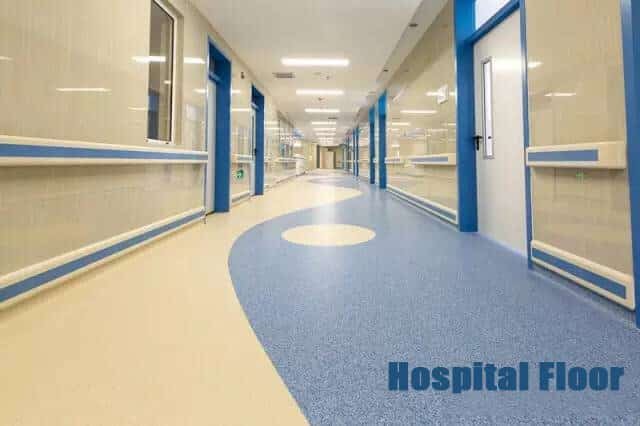
Different Types of Hospital Floors
Hospitals use various types of flooring materials, each with its own set of advantages. Understanding these materials helps in selecting the most suitable option for specific areas within a healthcare facility.
- PVC Flooring: As mentioned, PVC flooring is highly favored for its low maintenance and durability. It comes in various styles and colors, allowing customization to fit different hospital aesthetics. PVC is also resistant to bacteria and fungi, contributing to a healthier environment.
- Vinyl Flooring: Similar to PVC, vinyl flooring is another popular choice for hospitals. It offers good durability and is easy to clean. However, it might not be as resistant to stains and chemicals as PVC.
- Rubber Flooring: Rubber flooring is known for its cushioning effect and sound-absorbing properties. It is often used in areas where noise reduction and comfort are priorities. Rubber flooring is also slip-resistant and provides a good level of impact protection.
- Linoleum Flooring: Linoleum is a natural material made from linseed oil, cork dust, and wood flour. It is eco-friendly and offers good durability. However, it requires more maintenance compared to PVC flooring and can be more susceptible to damage from heavy objects.
- Terrazzo Flooring: Terrazzo is a composite material that consists of marble chips set in a cement or epoxy base. It is highly durable and offers a unique aesthetic appeal. However, terrazzo can be more expensive and may require regular polishing to maintain its appearance.
Conclusion
Dongweiyuanyu’s PVC hospital flooring offers numerous advantages, including easy maintenance, durability, comfort, and safety. When compared to other hospital flooring materials like vinyl, rubber, linoleum, and terrazzo, PVC stands out for its practical benefits and cost-effectiveness. By choosing PVC flooring, healthcare facilities can ensure a clean, safe, and comfortable environment for both patients and staff.
Reference:Hospital Flooring